

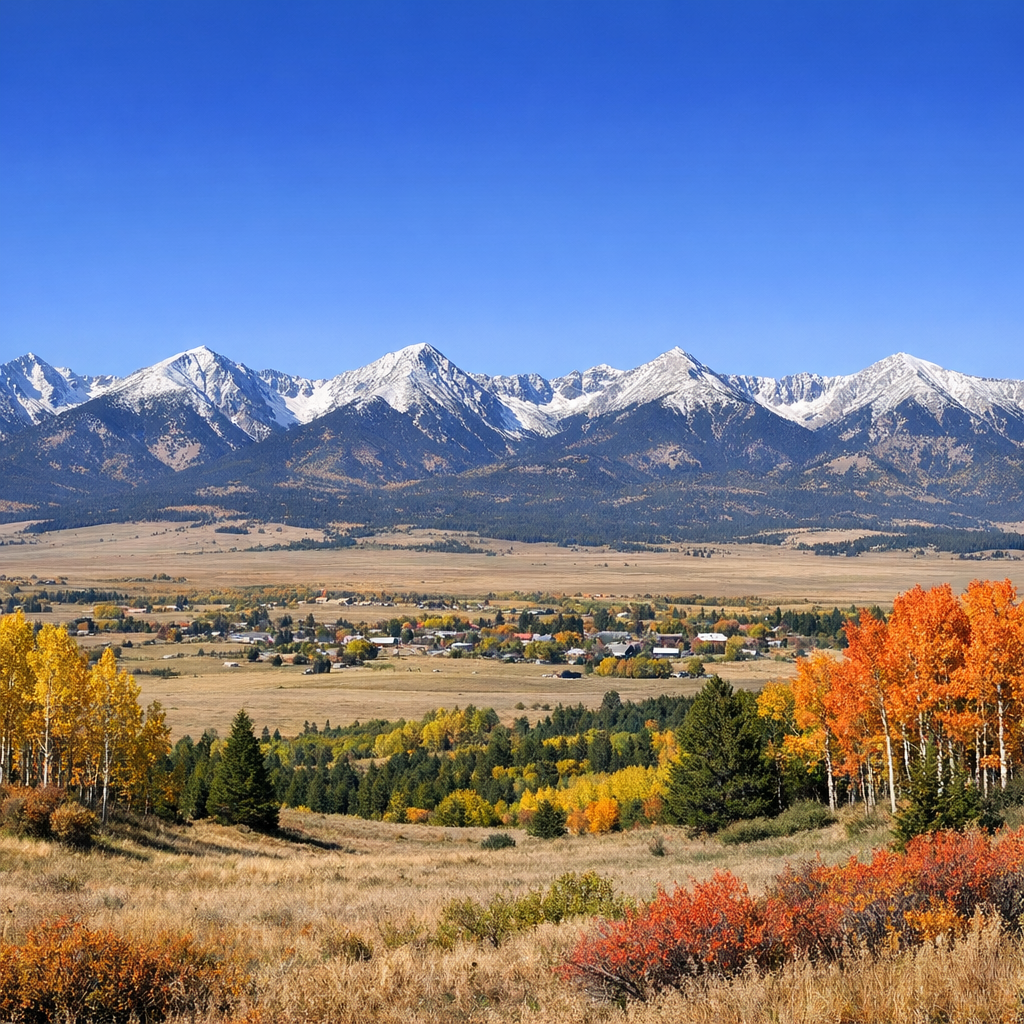
Westcliffe, Colorado, nestled at an elevation of approximately 7,800 feet, offers residents and visitors a distinctive four-season climate characterized by significant temperature variations and diverse weather patterns.
Summer: Warm Days and Cool Nights
Summers in Westcliffe are marked by warm daytime temperatures, typically ranging from the mid-70s to low 80s Fahrenheit. The low humidity and clear mountain air make it an ideal time for outdoor activities such as hiking and horseback riding. Evenings bring cooler temperatures, providing a comfortable respite from the day’s warmth.
Fall: A Tapestry of Colors
As autumn arrives, the landscape transforms with aspens turning golden across the Sangre de Cristo Mountains. Temperatures begin to cool, and the skies remain clear, offering some of the most picturesque views of the year.
Winter: Snowy and Sunny
Winter brings snowfall and colder temperatures, with daytime highs often in the 30s and 40s Fahrenheit. Despite the chill, Westcliffe enjoys many sunny days during the winter months. Residents should be prepared for snowstorms and cold nighttime temperatures, but the sunny days provide opportunities for winter sports and activities.
Spring: Unpredictable Transitions
Spring in the mountains can be unpredictable, with a mix of snowstorms and warm, sunny days. Rapid temperature changes are common as the region transitions from winter to summer. This variability requires flexibility in planning outdoor activities.
Environmental Considerations
Westcliffe’s climate also influences local environmental conditions. For instance, DeWeese Reservoir has experienced toxic blue-green algae blooms during the summer months, prompting advisories from Colorado Parks and Wildlife. These blooms can be harmful to humans and pets, emphasizing the need for community awareness and proactive measures to maintain water quality.
Understanding Westcliffe’s unique climate is essential for residents and visitors alike. By preparing for each season’s characteristics and staying informed about environmental issues, the community can fully appreciate and responsibly enjoy the natural beauty of the area.