

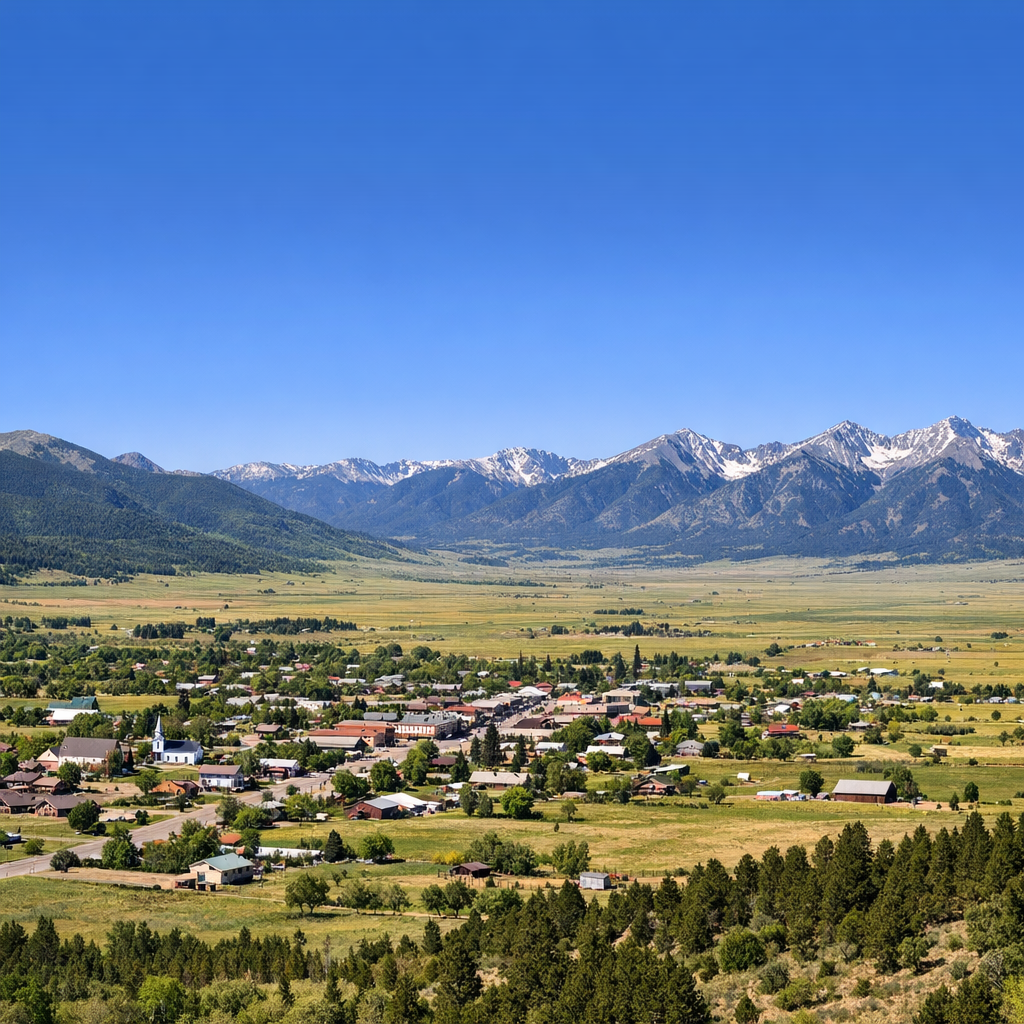
Westcliffe, Colorado, nestled at an elevation of 7,888 feet between the Wet Mountains and the Sangre de Cristo Range, offers a climate that is both unique and influential on daily life and local activities.
Seasonal Temperature Variations
The town experiences a wide range of temperatures throughout the year. Summers are warm and dry, with average high temperatures peaking around 79°F (26°C) in July. Winters are cold and snowy, with average lows dipping to approximately 14°F (-10°C) in January. This significant temperature variation is characteristic of Westcliffe’s high-altitude environment.
Precipitation and Humidity
Annual precipitation averages around 13.46 inches (341.88 mm), with July being the wettest month, receiving about 2.2 inches (56 mm) of rainfall. Humidity levels fluctuate seasonally, averaging 69% in the winter months and dropping to around 40% during the drier summer months.
Wind Patterns
Wind speeds in Westcliffe vary throughout the year. The windiest months are January through March, with average speeds of 7.5 mph (12 km/h). August is typically the calmest month, averaging 5.7 mph (9 km/h).
Environmental Considerations
Westcliffe’s climate influences various environmental factors. The town’s location and elevation contribute to its designation as an international dark sky community, offering exceptional stargazing opportunities. Additionally, the area’s climate supports diverse flora and fauna, making it a haven for outdoor enthusiasts.
Understanding these climatic patterns is essential for residents and visitors alike, as they impact everything from daily activities to long-term planning in the community.